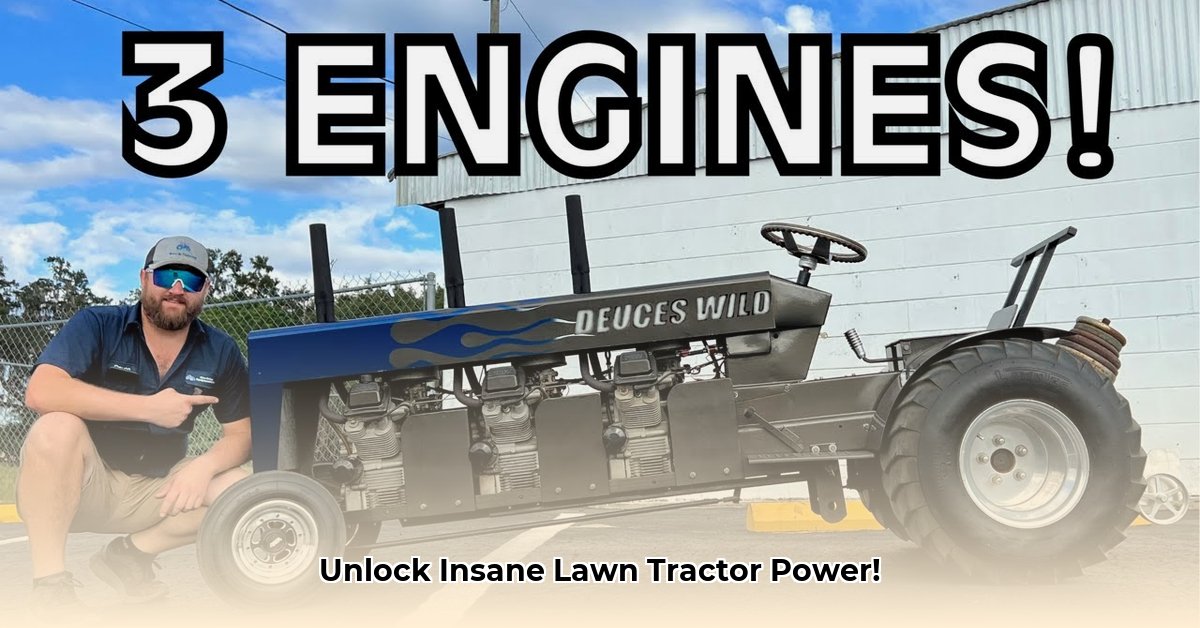
Lawn tractor pulling isn't just about mowing the lawn; it's a thrilling competition demanding peak engine performance. This comprehensive guide provides a step-by-step approach to modifying your lawn tractor engine for increased horsepower, covering everything from understanding your engine's mechanics to fine-tuning for optimal performance. For even more in-depth information, check out this helpful resource.
Understanding Your Lawn Tractor's Engine: The Foundation of Power
Before modifying your engine, understanding its core components is paramount. This section provides a simplified overview of key aspects, focusing on practical knowledge relevant to enhancements.
Key components include the camshaft (the component controlling valve timing) and the valve train (the system that opens and closes engine valves). These work together to regulate airflow and fuel delivery, impacting power output. Material choices also influence performance. Steel is a budget-friendly, durable option, while titanium offers lighter weight and increased strength (though at a higher cost). Choosing the right combination depends on the desired performance level and budget constraints.
Does your engine's design limit its potential? Knowing the engine's architecture is crucial for selecting effective upgrades. A deep understanding is crucial for successful modifications.
Choosing the Right Parts: Optimizing Performance
The market offers several options for enhancing lawn tractor engine performance. Two prominent manufacturers, Vogel and Lakota, provide contrasting approaches. Vogel focuses on reliable stock replacements, prioritizing longevity and ease of maintenance. In contrast, Lakota emphasizes high-performance racing components, offering more substantial power gains but possibly at the expense of durability.
| Feature | Vogel Manufacturing | Lakota Racing | Considerations |
|---|---|---|---|
| Focus | Reliable stock replacements | High-performance racing components | Stock replacements offer simpler installation and longer lifespan. High-performance parts usually yield greater increases in power but could require more skill and knowledge for installation. |
| Cam Shafts | Durable, hard-faced designs | High-performance, twin-cam systems | Twin-cam systems generally deliver better power increases than singular camshaft designs, but are more complex to install. |
| Materials | Primarily steel | Steel and titanium | Titanium offers weight savings and higher strength, but is more expensive and potentially more brittle. |
| Price Point | Generally more affordable | Generally more expensive | Budget significantly influences part selection. Balance cost with performance needs. |
This table provides a general overview. Crucially, detailed performance data and pricing information is often unavailable and needs to be researched individually. Always check reviews, compare specifications, and ensure availability before purchasing any part.
Installing and Maintaining Your Modified Engine: A Practical Guide
Modifying your engine requires meticulous precision and attention to safety. Improper installation can lead to engine damage or even injury.
Step 1: Preparation: Gather necessary tools, refer to your tractor's manual, and ensure a clean workspace. Safety first! Proper preparation reduces risk greatly.
Step 2: Disassembly: Carefully disassemble the relevant components, documenting their position with photos or detailed notes. This step is crucial for successful reassembly.
Step 3: Installation: Install the new components, adhering strictly to the manufacturer's instructions, paying close attention to torque specifications. Incorrect torque settings can cause damage to components.
Step 4: Reassembly: Reassemble the engine, ensuring everything is correctly aligned and functional. Double-check your work.
Step 5: Thorough Testing: Start the engine and monitor for any unusual noises, leaks, or performance issues. A post-installation check minimizes the chances of problems later on.
Step 6: Regular Maintenance: Perform regular maintenance, including fluid changes and inspections. Preventative maintenance improves the lifespan of your modified engine.
Remember to always wear appropriate personal protective equipment (PPE), including safety glasses and gloves.
Troubleshooting and Tuning: Optimizing Performance
Even with careful installation, issues can arise. Common problems might include gasket leaks or, with high-performance components, valve timing problems. Proper installation, rigorously following instructions, significantly reduces the risk of such issues.
Troubleshooting begins with identifying the problem. Is the engine misfiring? Check the spark plugs. Is there poor acceleration? Examine the carburetor settings. Fine-tuning might involve carburetor or fuel injection adjustments, but for significant modifications, seeking professional help is advisable. The initial risk assessment analysis can help pinpoint potential failure points which could be prioritized during testing.
Resources and Further Learning: Enhancing Your Expertise
This guide offers a foundation; continuous learning is key. Explore manufacturer websites (Vogel, Lakota), online forums dedicated to lawn tractor pulling, and relevant publications to stay up-to-date on the latest techniques and best practices. The constantly evolving nature of the field requires continuous learning.